
Zapier Careers: Salaries, Culture, and How Hiring Works
Zapier careers span engineering, product, design, marketing, and support roles, all fully remote, at a company that’s been distributed since its founding in 2011. If you’re considering applying, there’s more worth knowing than what shows up in a generic job listing. That includes a recent shift in how Zapier structures its roles, and an official stance on using AI tools during your application that most candidates don’t expect.
Here’s what working at Zapier actually looks like, what roles pay, and how the hiring process works.
Inside Zapier Careers: What It’s Actually Like to Work There
Employees at Zapier call themselves “Zapiens.” The company has operated fully remote since three co-founders, Wade Foster, Mike Knoop, and Bryan Helmig, started it in Columbia, Missouri, in 2011. They later relocated to the Bay Area for Y Combinator, but the company never adopted a central office model, even as it grew past 300 employees across dozens of countries.
Zapier evaluates employees against company values during biannual performance reviews rather than relying purely on output metrics. Leadership, including the CEO personally, teaches an onboarding course on how to give and receive feedback. That reflects a deliberate emphasis on open critique in a remote setting, where in-person course-correction isn’t an option.
Day-to-day work leans heavily on asynchronous communication, with Slack as the primary communication tool. Some employee reviews describe this as occasionally overwhelming given the volume of messages across a globally distributed team. Zapier has publicly responded to this feedback, though, pointing to internal resources for managing information flow and prioritization.
Zapier’s Shift Toward “AI-First” Roles
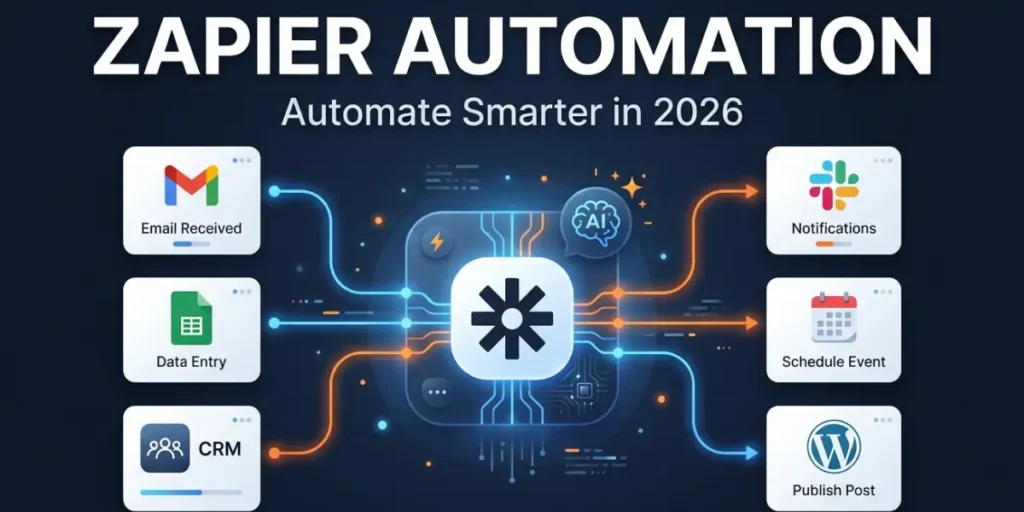
Here’s something genuinely new in Zapier’s hiring that older career guides don’t reflect. Several current job postings carry titles like “AI-First Full Stack Software Engineer.” These roles build AI-powered development practices directly into the job’s core expectations, rather than treating AI as an optional tool. Job descriptions now describe Zapier as building “the first enterprise-ready AI orchestration platform,” a notable repositioning from its original branding as a workflow automation tool.
This isn’t just marketing language. According to a case study Zapier published with Anthropic, the company reached 89% AI adoption across its entire employee base, the highest internal adoption rate in its history. It has also deployed more than 800 internal AI agents, more agents than it has employees. That’s an unusually concrete data point for a company to publish about its own internal AI usage. It signals that “AI-first” is an operational reality at Zapier, not just a hiring buzzword.
Current Zapier Job Openings and Departments
Zapier hires across a fairly consistent set of departments: engineering (including AI/ML-focused platform roles), product management, product design, product marketing, customer support, and brand and content teams. Openings fluctuate. Roles touching AI infrastructure, LLM operations, and AI orchestration features have become notably more common in recent postings compared to a few years ago.
The typical application window runs 30 days from when a role is posted. Zapier notes that high applicant volume can close a listing sooner, or a role can stay open longer if it isn’t filled within that window.
Zapier Salary Ranges by Role
Based on disclosed compensation from active job listings, here’s what several roles at Zapier currently pay:
| Role | Salary Range |
| Senior Product Manager | $143,900 – $261,200 |
| Senior Product Designer | $140,000 – $210,000 |
| AI-First Full Stack Software Engineer | $116,600 – $185,000 |
| Product Marketing Manager (UK) | £85,000 – £115,000 |
Ranges vary by seniority, specialization, and location. Zapier’s compensation transparency on individual listings tends to be more detailed for product, design, and engineering roles than for support or entry-level positions.
Zapier’s Remote Work Policy: What “All-Remote” Actually Means
Zapier markets itself as an all-remote company, but that doesn’t mean unrestricted global hiring. Job postings specifically note that Zapier maintains a list of countries where it currently cannot employ Zapiens permanently, for legal and operational reasons. If you’re applying from outside the US, UK, or other commonly supported regions, check that list before assuming you’re eligible.
Every job posting also links out to Zapier’s published Guide to Remote Work, Code of Conduct, and Diversity and Inclusivity resources. Together, these give applicants a clearer look at company culture upfront than a typical corporate careers page.
Can You Use AI Tools When Applying to Zapier?
Yes, explicitly. Zapier’s official stance, stated directly on its careers pages, welcomes candidates using AI tools during the application process. That’s a notably different posture than companies that penalize or disqualify AI-assisted applications. Zapier builds automation software and openly discusses its own heavy internal AI usage, so this consistency between what the company does and what it asks of candidates is worth noting as you prepare your application materials.
How to Apply to Zapier Careers
- Browse open roles on Zapier’s official careers page, filtering by department or team.
- Check the country eligibility list referenced in the posting if you’re applying from outside major supported regions.
- Review the linked culture resources (Guide to Remote Work, Code of Conduct, Diversity and Inclusivity) to understand expectations before applying.
- Prepare your application, using AI tools if helpful, since Zapier’s stated policy permits this.
- Apply within the posted window, generally 30 days from the listing date, keeping in mind popular roles can close early.
Frequently Asked Questions
Is Zapier a fully remote company? Yes. Zapier has operated remote-first since its founding in 2011 and has never adopted a central office model, though it does maintain a list of countries where it currently can’t employ staff for legal and operational reasons.
What does Zapier pay for engineering and product roles? Based on disclosed listings, product managers range from roughly $143,900 to $261,200, product designers from $140,000 to $210,000, and specialized engineering roles like AI-First Full Stack Software Engineer from $116,600 to $185,000. Actual pay varies by seniority and location.
Can I use ChatGPT or other AI tools when applying to Zapier? Yes. Zapier’s official careers policy explicitly welcomes candidates using AI tools during the application process, a stance the company frames as consistent with its own business and internal practices.
What does “AI-First” mean in Zapier’s job titles? It reflects a genuine shift in how Zapier structures certain roles. These positions build AI-powered development and workflow practices directly into job expectations, rather than treating AI as an optional add-on skill.
How long does a Zapier job posting stay open? Typically 30 days from the posting date. High applicant volume can close a role sooner, and positions that remain unfilled can stay open longer than the standard window.
Bottom Line on Zapier Careers
Zapier careers offer fully remote roles across engineering, product, design, and marketing, backed by a company culture built around asynchronous work and values-based performance reviews since 2011. What’s genuinely new right now is the shift toward “AI-First” role titles and Zapier’s own remarkably high internal AI adoption. Most generic job listing aggregators don’t capture either detail. If you’re applying, know the country eligibility restrictions upfront, and don’t hesitate to use AI tools in your application, since Zapier’s own stated policy explicitly welcomes it.